


Many business owners assume that if they want more leads, they need more traffic. That seems logical at first. More visitors should mean more opportunities, more inquiries, and more sales. But in many cases, the real problem is not traffic at all. The real problem is that the website is not converting enough of the visitors it already has.
That means the business may already be sitting on hidden opportunity. Instead of spending more money chasing extra clicks, it may be smarter to improve what happens after people arrive. A website that turns more of its existing visitors into leads can produce stronger business results without needing a major increase in traffic.
This is one of the most overlooked growth strategies online. Businesses often focus so much on getting people to the site that they ignore the parts of the website experience that influence trust, clarity, action, and response. When those pieces improve, the same traffic can become much more valuable.
Why More Traffic Is Not Always the First Answer
Traffic matters, but traffic alone does not guarantee results. If visitors land on a site and feel confused, unconvinced, or unsure of what to do next, many will leave without taking action. In that case, sending even more people to the same experience may only increase waste.
That is why smart businesses look at conversion before pouring more effort into acquisition. If your site is already getting attention but failing to turn that attention into calls, form submissions, bookings, or quote requests, then the website itself deserves closer attention.
A website should not just attract visitors. It should help move them toward a decision. If it fails at that job, traffic growth alone may not solve the deeper issue.
Start With a Clear Value Proposition
One of the fastest ways to improve lead generation is to make sure the website clearly explains what the business does, who it helps, and why someone should choose it. Many websites lose leads simply because the message is too vague.
When visitors land on your homepage, they should not have to guess what you offer. They should understand within seconds:
- What your business does
- Who your services are for
- What problem you solve
- What makes you different
If those answers are hidden, unclear, or buried under generic language, potential leads may leave before they ever understand your value. A sharper value proposition can make the same traffic far more responsive.
Improve Calls to Action
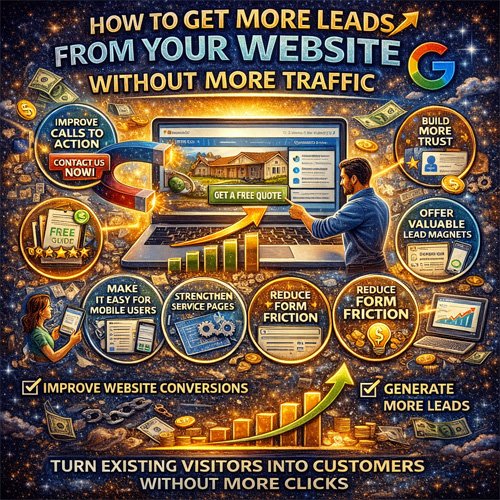
Many websites have traffic, but weak calls to action keep that traffic from becoming leads. A call to action should clearly tell the visitor what to do next and why that next step matters. If the buttons are vague, easy to miss, or poorly placed, users may hesitate or leave.
Strong calls to action usually use specific language such as:
- Request Your Free Quote
- Schedule a Consultation
- Book Your Appointment Today
- Call Now to Get Started
- Get a Free Website Review
Clear calls to action reduce friction. They help turn passive browsing into active decision-making. Even small improvements in button wording and placement can make a noticeable difference in lead volume.
Make the Website Easier to Use
If your site is hard to navigate, confusing to read, or cluttered with too many competing elements, visitors may leave before they take action. This is why user experience plays such a major role in lead generation.
A lead-generating website should feel easy. People should be able to find your services, understand your process, and reach out without unnecessary effort. Better usability often leads to better engagement, and better engagement often leads to more leads.
Improvements may include:
- Simpler navigation
- Cleaner page layouts
- Better spacing and readability
- More obvious contact options
- Fewer distractions competing with the main action
Build More Trust on the Page
A major reason visitors do not convert is lack of trust. They may be interested in what you offer, but they are not yet convinced that your business is the right choice. That hesitation can cost leads quietly every day.
Your website should work to reduce that doubt. Trust-building elements can include:
- Customer testimonials
- Case studies or success stories
- Before-and-after examples
- Professional certifications
- Years in business
- Guarantees or risk-reducing language
- Clear contact information and professional branding
The more confident visitors feel, the more likely they are to reach out. Trust often makes the difference between interest and action.
Strengthen Service Pages
Many websites lose leads because their service pages are too weak. They may briefly mention a service but fail to explain the real benefit, the process, the outcome, or the reason someone should choose that business over another.
A strong service page should help the visitor move closer to a decision. It should explain:
- What the service includes
- Who it is for
- What results or benefits to expect
- Why your approach is valuable
- What the next step should be
If your site already has traffic reaching service pages, stronger content on those pages can help turn more of that existing attention into leads.
Reduce Friction in Contact Forms
Sometimes websites lose leads simply because the form is too long, too complicated, or too intimidating. Visitors often want the next step to feel easy. If your contact form asks for too much information too early, some people will abandon it.
A good form should collect what you truly need without creating unnecessary resistance. In many cases, simpler forms perform better. Name, email, phone, and a short message may be enough to begin the conversation.
The easier it feels to reach out, the more likely a visitor is to do it.
Make Mobile Lead Generation Easy
A large portion of website visits now come from mobile devices. That means your lead generation strategy must work well on smaller screens. If buttons are hard to tap, text is difficult to read, or forms are awkward on mobile, you may be losing qualified leads without realizing it.
Mobile-friendly lead generation should include:
- Click-to-call buttons
- Short, simple forms
- Fast-loading pages
- Readable text and headings
- Clear calls to action near the top of the page
Improving mobile usability can raise conversions without changing traffic at all.
Use Better Lead Magnets or Offers
Visitors are more likely to become leads when they are given a compelling reason to respond. Sometimes the website is not failing because of design alone. Sometimes the offer itself is weak, generic, or easy to ignore.
A stronger offer might include:
- A free quote
- A free consultation
- A free audit or review
- A downloadable guide
- A limited-time bonus
- A no-obligation estimate
When the offer feels relevant and valuable, more visitors are willing to raise their hand and begin the relationship.
Match the Page to Visitor Intent
Not every visitor wants the same thing. Someone landing on a homepage may still be comparing options. Someone landing on a service page may be closer to taking action. Someone reading a blog post may need more education before contacting you.
The website should match the visitor’s stage of decision-making. Pages should include the right message, the right depth of information, and the right call to action for that moment. This is one reason conversion optimization works so well. It focuses on aligning the page with what the visitor needs next.
When the page fits the user’s intent better, lead generation usually improves.
Use Internal Links to Guide Visitors Deeper
Sometimes visitors do not convert right away because they need more information before they feel ready. Internal links can help guide them toward that information. A homepage can link to service pages. Service pages can link to testimonials, case studies, or FAQs. Blog posts can point toward service pages or quote pages.
This helps keep visitors moving instead of bouncing away. It also gives your website a more intentional path toward lead generation. A site that guides curiosity well often converts better than one that leaves users to figure everything out on their own.
Test What Already Gets Traffic
If certain pages already attract visitors, those pages are often the best places to improve conversions first. Instead of trying to overhaul everything at once, look at the pages already receiving attention and ask:
- Is the offer clear?
- Is the call to action strong?
- Does the page build trust?
- Does it answer likely questions?
- Does it make contacting the business easy?
Improving a page that already has traffic can produce faster gains than waiting for an entirely new traffic source to grow. This is often one of the smartest ways to increase leads without increasing visits.
Why Conversion Improvements Often Produce Better ROI
Getting more traffic usually costs time, money, or both. You may need more SEO work, more ad spend, or more content creation. But improving conversions makes your existing traffic work harder. That often creates a stronger return because you are extracting more value from what you already have.
Even small improvements in conversion rate can create meaningful business growth. If more of your current visitors become leads, the whole website becomes more productive without requiring a major jump in audience size.
In many cases, this is one of the fastest and most cost-effective ways to improve online performance.
Final Thoughts
If your website is not generating enough leads, do not assume the answer is always more traffic. Sometimes the best opportunity is already there, hidden inside the traffic you already have. By improving clarity, trust, usability, offers, and calls to action, you can turn more existing visitors into real business opportunities.
At WebDesignerProSEOExpert.com, the best-performing websites are not just good at attracting attention. They are good at converting it. When your site is designed to guide visitors toward action, more leads can happen without chasing more traffic first.