


 Many businesses have a website, but far fewer have a website that truly works for them. Some sites act like digital brochures, sitting online with a few pages of information and little real business impact. Others quietly generate traffic, leads, inquiries, bookings, and sales every day without needing constant manual effort. The difference is not luck. The difference is strategy.
A website can become much more than an online presence. It can become a revenue-producing asset that supports your business day and night. When built correctly, it helps people find you, trust you, understand your value, and take action whether you are available at that moment or not. That is what it means to turn your website into a 24/7 sales machine.
A high-performing website does not just exist to look professional. It exists to move visitors toward a decision. It should bring in the right audience, communicate clearly, remove doubt, and make the next step easy. When those pieces work together, your site can generate business long after your office closes for the day.
Your Website Should Be More Than an Online Brochure
A lot of businesses still treat their website like a static information page. It lists services, includes a contact form, maybe shares a few photos, and stops there. While that may be enough to prove the business exists, it is usually not enough to create steady revenue.
A true sales-focused website is designed around outcomes. It does not only answer basic questions. It helps shape decisions. It gives visitors reasons to stay, trust, and act. It supports the sales process by doing part of the persuasion before a call, email, or meeting ever happens.
If your website is only informing people, it may be underperforming. If it is guiding them toward action, it can become a much more powerful business tool.
Revenue Starts With the Right Traffic
A website cannot generate consistent revenue without attracting relevant visitors. That is where SEO, local visibility, content strategy, and search intent come into play. The goal is not just to get more clicks. The goal is to attract the right people, the ones most likely to need what your business offers.
When your pages are built around real services, real customer needs, and real search behavior, your website becomes easier to find by people with stronger intent. Those visitors are more valuable than random traffic because they are already closer to taking action.
A website that draws the right audience gives itself a far better chance of turning visits into revenue.
Clear Messaging Turns Interest Into Opportunity
Once the right people land on your site, the next challenge is communication. They need to understand quickly what you do, who you help, what makes you different, and why they should trust you.
This is where many websites lose revenue potential. They use vague headlines, generic promises, or cluttered messaging that fails to explain the offer clearly. A sales machine website does the opposite. It makes the value obvious. It answers core questions fast and removes confusion early.
Visitors should be able to understand within seconds:
- What your business offers
- Who the service or product is for
- Why it is valuable
- What to do next
Clear messaging helps move people from curiosity to serious consideration.
Trust Is a Major Revenue Driver
A website does not generate revenue simply because it gets seen. It generates revenue when people feel confident enough to move forward. That means trust is essential. If visitors are not sure your business is credible, professional, or capable, many will leave without contacting you.
A strong website builds trust in multiple ways:
- Professional design and branding
- Customer testimonials and reviews
- Case studies or proof of results
- Visible contact information
- Guarantees, certifications, or years of experience
- Clear service explanations and transparent messaging
Trust reduces hesitation. When hesitation drops, conversions rise. That is how trust becomes a revenue factor, not just a branding factor.
Design Affects Revenue More Than Many Businesses Realize
Web design is not just about appearance. It influences how people feel, how easily they can navigate the site, and whether they continue moving toward a sale. A cluttered, outdated, or confusing design can quietly kill momentum. A strong design can guide people deeper into the site and make action feel natural.
Revenue-focused design usually emphasizes:
- Simple navigation
- Strong visual hierarchy
- Readable text and clean spacing
- Fast page loading
- Mobile-friendly usability
- Clear calls to action
Better design helps the visitor experience feel smoother and more trustworthy, which makes it easier for the website to do its selling job.
Strong Calls to Action Turn Browsers Into Leads
A website may be attracting visitors and building trust, but if it does not clearly invite action, it will still leave money on the table. Calls to action are what move people from passive viewing to active response.
Effective calls to action should be:
- Easy to notice
- Specific in wording
- Relevant to the visitor’s stage of decision-making
- Placed in logical moments throughout the site
Instead of weak phrases, businesses often do better with action-focused language such as:
- Request Your Free Quote
- Book a Consultation
- Get Started Today
- Call Now to Speak With Our Team
- Schedule Your Appointment
Strong calls to action create movement. Movement is what turns attention into leads and leads into revenue.
Service Pages Should Sell, Not Just Describe
Many business websites have service pages that simply mention what they offer and stop there. A revenue-producing website goes much further. Its service pages are designed to support decisions. They explain the problem, the solution, the benefits, the process, and the next step.
A strong service page can help a visitor feel informed and ready before they ever contact you. That means your site is doing part of the sales work in advance.
Effective service pages often include:
- A clear headline tied to the service
- Benefits and outcomes
- Trust signals or proof
- Frequently asked questions
- A visible call to action
When your pages are built to persuade as well as inform, your website becomes much stronger as a revenue asset.
Content Can Keep Selling Long After It Is Published
Useful content is one of the reasons a website can function like a 24/7 sales machine. A strong blog post, service guide, FAQ page, or local landing page can continue attracting and educating visitors long after it goes live.
Content supports revenue by:
- Bringing in search traffic
- Answering common buyer questions
- Building trust and authority
- Guiding users toward service pages or contact actions
This means good content keeps doing work over time. It can continue supporting search visibility and sales conversations without needing constant live involvement from your team.
Mobile Experience Can Make or Break Sales
A website cannot operate like a real sales machine if it performs badly on mobile devices. Many visitors now browse, compare, and contact businesses from phones first. If your mobile experience is poor, revenue opportunities can disappear quickly.
A strong mobile site should make it easy to:
- Read the main message
- Tap a call-to-action button
- Call the business
- Fill out a form
- Browse services clearly
If the mobile version is slow, cluttered, or awkward, even interested visitors may leave. That is why mobile usability is directly tied to revenue performance.
Speed Protects Revenue Opportunity
A slow website weakens nearly every part of the sales process. People may leave before they read the offer, before they see your proof, or before they reach the contact form. That means your website loses revenue potential before the selling even begins.
Speed optimization helps protect that opportunity. Faster pages make it easier for users to stay, trust the site, and move through it without frustration. A fast site feels more modern, more professional, and more reliable.
In that sense, speed does not just support SEO. It supports sales.
Lead Capture Turns Website Interest Into Business Opportunity
A website becomes far more valuable when it consistently captures leads. This might happen through quote requests, consultation forms, appointment scheduling, downloads, demo requests, or call actions.
The key is to make lead capture feel easy and worthwhile. Visitors should not feel like they are making a complicated commitment. The site should present the next step as simple, useful, and low-friction.
A lead captured today can become revenue tomorrow, next week, or next month. That is why lead generation is such an important part of the 24/7 sales machine idea. Your website keeps creating business opportunities even while you are focused elsewhere.
What a 24/7 Sales Machine Website Usually Includes
A website built to generate revenue consistently often includes:
- SEO and search visibility strategy
- Clear messaging and value proposition
- Professional design and trust-building elements
- Strong service or product pages
- Fast loading speed
- Mobile-friendly usability
- Effective calls to action
- Lead capture forms or contact options
- Useful content that supports long-term traffic and conversion
These pieces work together to turn a website into something active, strategic, and consistently valuable.
Why This Matters for Long-Term Growth
A business that depends entirely on manual outreach, referrals, or one-time promotions may struggle to scale consistently. A strong website helps create a more stable foundation. It can support discovery, trust, and conversion around the clock, giving the business another engine for growth.
That does not mean the website replaces everything else. It means the website becomes a stronger partner in the business. It keeps working when you are in meetings, on calls, sleeping, or focused on delivery. That kind of ongoing support can make a major difference over time.
Final Thoughts
Turning your site into a 24/7 sales machine is not about hype. It is about building a website that attracts the right people, earns trust, guides decisions, and captures opportunity at every stage of the visitor journey. When design, SEO, content, speed, trust, and conversion strategy all work together, your site becomes much more than an online brochure.
At WebDesignerProSEOExpert.com, the best business websites are built to do real work. They do not just sit online waiting to be noticed. They actively support growth, generate leads, and help turn website traffic into revenue every day.
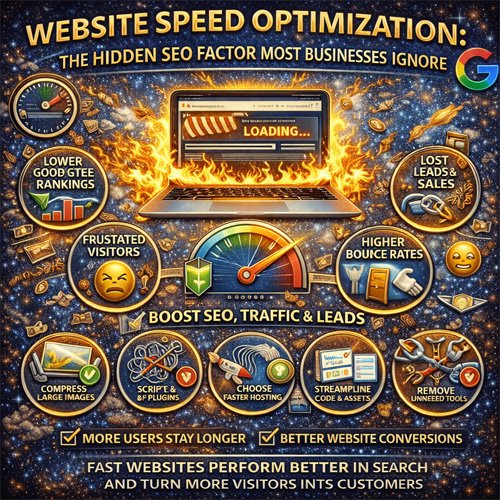 Many businesses focus on keywords, content, backlinks, and design when trying to improve search rankings, but they often overlook one of the most important performance factors on the site itself: speed. A website may have strong content and a polished appearance, yet still underperform because it takes too long to load. That delay can quietly damage rankings, weaken user trust, reduce engagement, and cost the business valuable leads.