


Webdesigner Pro SEO Expert

Main Menu

  • Home
  • Web Designer
  • Ravens Design Shop
  1. You are here:  
  2. Home
  3. Web Designer

How Professional Web Design Increases Conversions and Sales

 article 4

A website can attract visitors, but traffic alone does not grow a business. What matters most is what those visitors do after they arrive. Do they stay and explore? Do they trust what they see? Do they contact the business, request a quote, book an appointment, or make a purchase? These actions are called conversions, and they are one of the clearest signs of whether a website is truly doing its job.

Many businesses focus heavily on getting traffic but give far less attention to how the website itself influences decisions. That is a costly mistake. A poorly designed site can quietly drive away potential customers, even when the offer is strong. On the other hand, professional web design can improve trust, reduce friction, guide users clearly, and turn more visitors into leads and sales.

Good design is not just about looking modern. It is about helping people feel confident enough to take the next step. When a website is designed professionally, every part of the experience becomes more effective, from the first impression to the final click. That is why businesses that invest in design often see better conversion performance and stronger revenue results over time.

First Impressions Shape Trust Fast

When someone lands on your website, they start forming an opinion almost immediately. They notice whether the site looks current or outdated, organized or confusing, polished or careless. That first impression affects trust faster than many business owners realize.

If the website feels cluttered, visually inconsistent, hard to read, or poorly built, visitors may assume the business itself is similar. They may not consciously think through that judgment, but it still influences whether they stay or leave. A professional design helps create the opposite effect. It tells visitors that the business is credible, serious, and worth considering.

Trust is one of the biggest drivers of conversion. People are far more likely to buy, call, or inquire when the website feels reliable and professionally presented.

Professional Design Makes the Message Clear

One of the biggest reasons websites fail to convert is confusion. Visitors arrive and cannot quickly tell what the business does, who it serves, what makes it different, or what to do next. When that happens, many leave without taking action.

Strong conversion-focused web design solves this by making the message clear. The homepage should immediately communicate the business value. Service pages should explain what is offered in a simple and useful way. Buttons and calls to action should show visitors where to go next without making them guess.

Clarity reduces hesitation. The easier it is for a visitor to understand the offer and the next step, the more likely they are to convert.

User Experience Directly Affects Sales

User experience is not just a design trend. It has a direct relationship to business performance. A website that feels smooth, intuitive, and easy to use helps people stay engaged longer and move through the site with less frustration.

Professional web design improves user experience by paying attention to:

  • Easy navigation
  • Readable layout and typography
  • Logical page flow
  • Strong mobile experience
  • Fast loading speed
  • Clear contact options

Each of these details helps remove obstacles between interest and action. A better user experience usually means more pages viewed, more trust built, and a higher chance of inquiry or purchase.

Design Guides the Visitor Toward Action

A well-designed website does not leave visitors wandering. It guides them. Layout, spacing, color contrast, button placement, page structure, and visual hierarchy all influence where people look and what they do next.

This is one of the biggest ways professional design increases conversions. It leads the user’s attention toward the most important actions. That might mean requesting a quote, scheduling a consultation, calling the business, filling out a form, or buying a product.

Strong design makes those actions feel natural. Weak design hides them, competes with them, or makes them easy to miss. When visitors are not clearly guided, many do nothing at all.

Mobile Design Matters More Than Ever

A large share of website traffic now comes from mobile devices. That means your site is often being judged on a smaller screen first. If the mobile version is hard to use, loads slowly, or looks broken, you may lose valuable prospects before they ever see the full offer.

Professional design takes mobile usability seriously. It makes sure buttons are easy to tap, text is easy to read, forms are manageable, menus are simple, and pages load efficiently on phones and tablets.

This matters for conversions because mobile users are often ready to act quickly. They may want to call now, check pricing, find directions, or submit a request. If the mobile experience makes that difficult, the opportunity can disappear in seconds.

Professional Design Supports Better Calls to Action

Calls to action are one of the most important parts of any business website. These are the prompts that tell visitors what to do next. Even a good offer can underperform if the calls to action are weak, vague, or hard to find.

Professional web design strengthens calls to action by making them visible, specific, and well-positioned. Instead of generic wording, the site can use action-focused language such as:

  • Request Your Free Quote
  • Book Your Consultation
  • Call Today to Get Started
  • Schedule a Demo
  • Shop the Collection

A professional designer also knows where those calls to action should appear so they support the visitor journey instead of interrupting it awkwardly.

Better Design Reduces Bounce and Abandonment

Every website loses some visitors, but bad design usually causes far more abandonment than necessary. People leave when pages feel messy, outdated, slow, confusing, or untrustworthy. They also leave when the site overwhelms them with too much information or gives them no obvious path forward.

Professional design helps reduce those losses by creating a smoother experience from the first click onward. It gives visitors a better reason to stay, engage, and continue exploring. The more effectively a site keeps attention, the better chance it has to create a conversion later in the visit.

In many cases, better design increases results not by changing the offer, but by stopping the silent leaks in the user journey.

Design Affects Perceived Value

The way a website looks also affects how people perceive pricing, quality, and overall value. A business with a polished, modern, professional site often appears more premium than one with a weak online presence. This can influence whether visitors feel the business is worth contacting, worth trusting, or worth paying more for.

This is especially important for service businesses, consultants, agencies, medical practices, and companies selling higher-ticket offers. In these spaces, the website is often part of the sales process. It is not just a source of information. It is part of the proof.

When the design reflects quality, the business can often justify stronger pricing and stronger positioning in the market.

Professional Web Design Improves SEO Performance Too

While the primary focus here is conversions and sales, professional design also supports search performance. A site that is fast, mobile-friendly, structured well, and easy to navigate helps search engines and users at the same time.

That means professional design can improve not just what happens after visitors arrive, but how often the right people find the site in the first place. When design and SEO work together, the website becomes a stronger business tool overall. It attracts better traffic and converts that traffic more effectively.

What High-Converting Professional Websites Usually Include

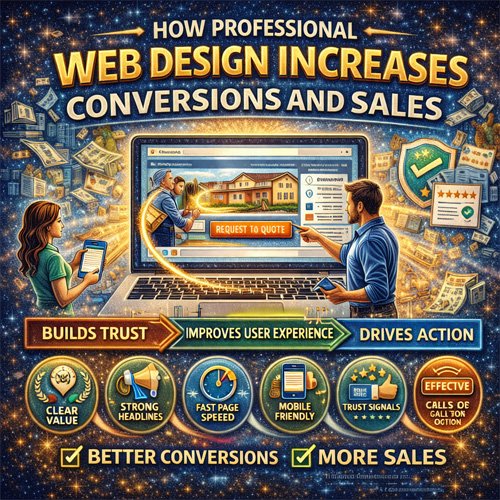
A professional website built to increase conversions and sales often includes:

  1. A clear headline and value proposition
  2. Strong visual hierarchy that directs attention
  3. Simple navigation that helps users find what they need quickly
  4. Fast page speed on desktop and mobile
  5. Trust signals such as reviews, testimonials, certifications, or guarantees
  6. Effective calls to action placed in the right moments
  7. Service or product pages built around user intent
  8. Mobile responsiveness for today’s browsing habits
  9. Clean forms and contact options that make response easy

These elements work together to turn attention into action instead of leaving visitors uncertain or unconvinced.

Why DIY or Outdated Design Often Costs More Than It Saves

Some businesses try to save money by using outdated templates, rushed builds, or improvised design choices. While that may reduce the upfront cost, it often creates long-term losses in conversion performance. A site that does not convert well quietly wastes the traffic you worked hard to attract.

In that sense, weak design can become more expensive than professional design. It may cost you inquiries, customers, and sales every month without making the loss obvious. Investing in a website that performs well often creates a stronger return because the site helps generate more business over time.

Final Thoughts

Professional web design increases conversions and sales because it improves how people experience your business online. It builds trust faster, communicates the message more clearly, guides visitors toward action, and reduces the friction that often causes people to leave without responding.

At WebDesignerProSEOExpert.com, the best websites do more than look attractive. They help businesses grow. When design is built around usability, clarity, trust, and action, your website becomes more than a digital brochure. It becomes a sales asset working for your business every day.
Web Designer Related Articles

  • From Website to Revenue: Turning Your Site Into a 24/7 Sales Machine
  • How Professional Web Design Increases Conversions and Sales
  • How to Get More Leads From Your Website Without More Traffic
  • Mobile-First Web Design: Why It Matters for SEO in 2026
  • SEO-Friendly Web Design: How to Build a Website Google Loves
  • The Ultimate Local SEO Guide for Small Business Websites
  • Top 10 Website Mistakes That Are Killing Your Google Rankings
  • Web Design vs SEO: Why You Need Both to Rank on Google
  • Website Speed Optimization: The Hidden SEO Factor Most Businesses Ignore
  • Why Every Website Needs SEO Built In

The Ultimate Local SEO Guide for Small Business Websites

 article 3

For small businesses, visibility in the local market can make the difference between slow growth and a steady flow of customers. A business might offer excellent service, fair pricing, and a professional website, but if nearby customers cannot find it when searching online, that business is missing real opportunities every day. This is where local SEO becomes essential.

Local SEO helps small businesses appear in the searches that matter most: the searches made by people nearby who are actively looking for products, services, or solutions. These are often high-intent searches. Someone looking for a local roofer, dentist, plumber, salon, or marketing consultant is not just browsing for entertainment. They are often trying to solve a problem or make a decision soon.

That is why small business local SEO is so powerful. It helps connect your website, your services, and your local presence with the people most likely to become customers. When done well, it can improve visibility, increase calls, generate leads, and help build long-term business growth.

What Local SEO Really Means

Local SEO is the process of optimizing your online presence so your business appears more often in location-based searches. These might include searches with city names, neighborhood names, “near me” phrases, or service terms tied to a specific area.

Local SEO is different from broad national SEO because the goal is not just to rank anywhere. The goal is to rank in the areas where your actual customers live, work, and search. For most small businesses, this matters more than general traffic. A hundred visitors from across the country may be less valuable than ten qualified local visitors who are ready to call or book.

A strong local SEO strategy helps your business appear in local organic search results, map-related searches, and service-based queries that are directly connected to your market.

Why Small Businesses Need Local SEO

Small businesses often compete against larger brands with bigger budgets, bigger teams, and broader name recognition. Local SEO helps level the playing field by giving smaller businesses a way to compete where proximity and relevance matter more than size.

Instead of trying to outrank massive companies everywhere, a local business can focus on becoming highly visible in its own service area. That is often a smarter and more profitable strategy.

Local SEO matters because it can help:

  • Drive more nearby traffic to your website
  • Increase calls, contact form inquiries, and appointments
  • Improve trust with local customers
  • Support map-related visibility and local brand awareness
  • Generate more qualified leads instead of random traffic

If your business depends on serving a specific city, region, or neighborhood, local SEO should not be optional. It should be part of your growth strategy.

Start With a Strong Website Foundation

A business cannot build strong local visibility on a weak website foundation. Your website should be fast, mobile-friendly, easy to navigate, and clearly structured around your services and locations. If visitors arrive and struggle to understand what you offer, where you work, or how to contact you, even good rankings may not turn into results.

A strong local website usually includes:

  • Clear service pages
  • Location-focused content
  • Fast page loading
  • Mobile responsiveness
  • Strong calls to action
  • Easy-to-find contact details

Local SEO works best when the website already supports trust and usability.

Create Service Pages That Match Search Intent

One of the most common mistakes small businesses make is trying to rank a single generic homepage for every service they offer. That often limits relevance. A better approach is to create dedicated pages for your main services so search engines and visitors can clearly understand what your business does.

For example, instead of one vague page covering everything, a business may benefit from separate pages for:

  • Roof repair
  • Roof replacement
  • Emergency roof service
  • Commercial roofing

This structure helps your website align more closely with what local customers are actually searching for. It also creates stronger opportunities to rank for service-specific local phrases.

Build Location Relevance Into the Site

A local business website should make its service area obvious. Visitors should immediately understand where you work and which communities you serve. Search engines should be able to see that same relevance through your page titles, headings, content, and contact details.

This often means including:

  • City and region references in important pages
  • Location-specific service pages where appropriate
  • Clear service area information
  • Consistent name, address, and phone details
  • Locally relevant testimonials or project examples

The goal is not to stuff city names everywhere. The goal is to show authentic local relevance in a clear and useful way.

Optimize Your Google Business Profile

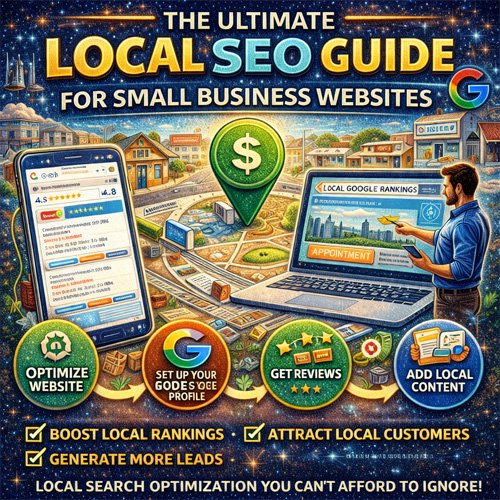
One of the most important parts of local SEO is your Google Business Profile. This profile helps your business appear in local map-related searches and provides important information to potential customers such as your hours, contact details, service categories, photos, and reviews.

A strong profile should be complete, accurate, and active. That means your business name, address, phone number, website link, categories, business description, and service details should all be kept current and consistent.

For many small businesses, this profile is one of the first things customers see before they ever visit the website. That makes it a critical part of your local search presence.

Use Reviews to Build Trust and Local Strength

Reviews are powerful for both trust and visibility. They help customers feel more confident in your business, and they also reinforce your local credibility. When people compare multiple businesses in the same market, reviews often influence who gets the call.

Encourage satisfied customers to leave honest reviews, especially when the service experience is still fresh in their minds. Make the process easy and consistent. A business that steadily earns authentic reviews often appears more active, more trustworthy, and more established in its community.

Reviews also provide useful local language around your services and customer experience, which can help reinforce relevance.

Make Sure Your NAP Information Is Consistent

NAP stands for name, address, and phone number. Consistency matters because search engines want confidence that the business information they find across the web is accurate and reliable.

If your business name is written one way on your website, another way on business listings, and another way on directories, that can create confusion. The same goes for mismatched addresses or phone numbers.

Your website, Google Business Profile, and other important online listings should show the same core business information in a consistent format. This helps strengthen trust with both search engines and customers.

Focus on Mobile Experience

Many local searches happen on mobile devices. People often search while they are on the go, comparing options quickly, checking business hours, reading reviews, or trying to contact a company right away.

That means your website must work well on mobile. It should load fast, display cleanly on smaller screens, and make it easy for users to tap to call, request a quote, or get directions. A poor mobile experience can cost you leads even if your rankings are strong.

Mobile usability is not just a design issue. It is a local SEO issue too.

Create Helpful Local Content

Content can strengthen local SEO when it answers the kinds of questions your audience is likely to ask. This does not mean filling your site with random blog posts. It means creating content that supports your services, reflects your market, and adds real value.

Useful local content ideas may include:

  • Service guides for your city or region
  • Frequently asked questions from local customers
  • Neighborhood or city service pages
  • Case studies from local projects
  • Blog posts about common local problems and solutions

This kind of content helps your site show depth, authority, and real-world relevance in the market you serve.

Strengthen Internal Linking

Internal linking helps search engines understand how your pages connect and which pages matter most. It also helps visitors navigate your site more easily. A small business website should not feel like a collection of isolated pages. It should feel connected and intentional.

For example, a homepage can link to key service pages. Service pages can link to related location pages. Blog posts can link back to core services and contact pages. These connections improve usability and reinforce page relevance.

Strong internal linking is one of the simplest ways to improve both SEO clarity and user experience.

Track the Right Local SEO Results

Local SEO is not just about impressions or rankings. What matters most is whether it helps generate real business outcomes. Small businesses should pay attention to results such as:

  • Website calls
  • Form submissions
  • Appointment bookings
  • Direction requests
  • Service page traffic from local areas
  • Increases in local search visibility over time

Rankings matter, but they should be connected to meaningful business movement. The goal is not just to be seen. The goal is to be chosen.

Common Local SEO Mistakes to Avoid

Many small business websites underperform because of a few avoidable issues. Common mistakes include:

  1. Using one generic page for too many services
  2. Failing to mention service areas clearly
  3. Ignoring mobile usability
  4. Leaving Google Business Profile incomplete
  5. Having inconsistent business information online
  6. Publishing weak or thin content
  7. Neglecting reviews and local trust signals

Avoiding these problems can make a major difference in local visibility and lead generation.

Why Local SEO Is a Long-Term Asset

Local SEO is not a one-time task. It is an ongoing asset-building process. A well-optimized small business website can continue attracting qualified local traffic long after a page is published or updated. That makes local SEO different from short-term marketing channels that stop producing results the moment spending stops.

When your website is structured well, your local relevance is clear, your profile is strong, your reviews grow steadily, and your content supports customer intent, you create an online presence that becomes more valuable over time.

That long-term value is one of the biggest reasons local SEO deserves serious attention.

Final Thoughts

Local SEO helps small business websites do what they are supposed to do: get found by nearby customers who are actively looking for help. It is not just a technical checklist. It is a practical growth strategy that connects your services with the people most likely to need them.

At WebDesignerProSEOExpert.com, the best local SEO strategy starts with a clear website foundation, strong service pages, real location relevance, and a user experience that supports trust and action. When these pieces work together, a small business website becomes much more than an online brochure. It becomes a local lead-generation asset.

Web Designer Related Articles

  • From Website to Revenue: Turning Your Site Into a 24/7 Sales Machine
  • How Professional Web Design Increases Conversions and Sales
  • How to Get More Leads From Your Website Without More Traffic
  • Mobile-First Web Design: Why It Matters for SEO in 2026
  • SEO-Friendly Web Design: How to Build a Website Google Loves
  • The Ultimate Local SEO Guide for Small Business Websites
  • Top 10 Website Mistakes That Are Killing Your Google Rankings
  • Web Design vs SEO: Why You Need Both to Rank on Google
  • Website Speed Optimization: The Hidden SEO Factor Most Businesses Ignore
  • Why Every Website Needs SEO Built In
  1. Web Design vs SEO: Why You Need Both to Rank on Google
  2. Why Every Website Needs SEO Built In

Page 4 of 5

  • 1
  • 2
  • 3
  • 4
  • 5

Policies

  • Privacy Policy
  • Terms of Service
  • Disclaimer
  • Help Desk