



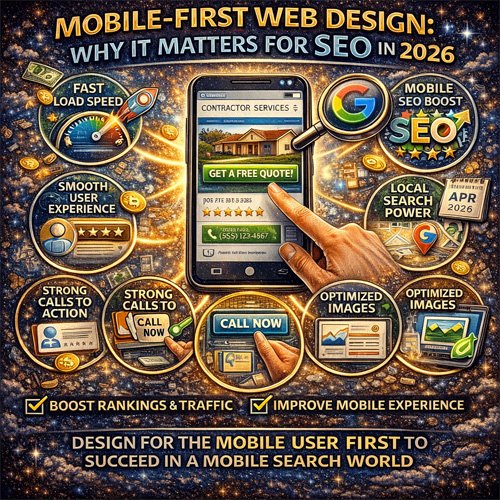
 A website that works well on desktop but performs poorly on a phone is no longer a strong website. In 2026, that gap can cost businesses traffic, rankings, leads, and sales. More people browse, search, compare, and contact businesses from mobile devices than ever before. That means the mobile experience is not a side concern. It is one of the most important parts of your website’s overall performance.
This is why mobile-first web design matters so much. Instead of designing for large screens first and treating phones like an afterthought, mobile-first design starts with the smaller screen experience and builds upward. That approach creates websites that are clearer, faster, easier to use, and better aligned with how people actually interact online.
It also matters for search visibility. Google wants to rank websites that provide a strong user experience, and mobile usability is a major part of that. If your site is hard to use on a phone, it may struggle not only with conversions, but with rankings as well. For businesses that care about SEO in 2026, mobile-first design is no longer optional.
What Mobile-First Web Design Really Means
Mobile-first web design means building the website around the mobile user experience from the beginning. Instead of squeezing a desktop design down to fit a phone, the site is planned so the most important content, actions, and visual structure work well on smaller screens first.
This changes how designers think about layout, navigation, spacing, images, forms, and calls to action. It forces clarity. Because mobile screens have less room, the design must be simpler, more intentional, and more focused on what matters most.
The result is often a better website overall. A site that works beautifully on mobile usually becomes cleaner and more user-friendly across all devices.
Why Mobile Matters So Much for SEO
Search engines want to deliver results that satisfy users. If users are searching from mobile devices, Google wants to show pages that perform well on mobile devices. That means page speed, readability, tap-friendly buttons, navigation clarity, and overall mobile usability all matter.
A site that looks broken, cramped, slow, or frustrating on a phone creates a poor experience. Users may bounce quickly, fail to engage, or leave before taking any action. Those signals can weaken your website’s overall effectiveness.
This is why mobile website optimization supports SEO. Better mobile performance helps search engines trust that your website is useful, and it helps visitors stay long enough to engage with your content.
Mobile Searches Often Carry Strong Intent
Many mobile searches are action-oriented. People search on phones when they want quick answers, nearby services, directions, pricing, contact details, or immediate solutions. A user looking up a dentist, roofer, restaurant, consultant, or contractor from a phone may be much closer to taking action than a casual desktop browser.
That means your mobile site is often your first chance to win the lead. If the experience is slow or confusing, you may lose that opportunity before the user ever considers your offer seriously.
A mobile-first site helps support this real-world behavior. It puts the most important information in the right place, makes action easier, and respects the urgency that often comes with mobile searching.
Speed Becomes Even More Important on Mobile
Speed has always mattered online, but it matters even more on mobile. Users on phones often expect quick access, and they are less patient with slow-loading pages. Heavy images, excessive scripts, cluttered layouts, and oversized media can all damage the mobile experience.
A mobile-first approach encourages lighter, faster pages. It pushes businesses to focus on essentials and avoid unnecessary elements that may look impressive but hurt usability. Faster pages improve the user experience, reduce abandonment, and create a better environment for both SEO and conversions.
In 2026, a slow mobile site is not just an inconvenience. It is a competitive disadvantage.
Simple Navigation Helps Users and Search Engines
Navigation on mobile devices needs to be clear and efficient. Visitors should be able to find core services, contact options, and important pages quickly without digging through confusing menus or excessive clicks.
Mobile-first design often improves navigation because it forces businesses to prioritize. What truly matters? Which pages need the most visibility? Which actions should appear first? Those questions help simplify the structure of the site.
Better navigation supports both usability and SEO. It helps users stay oriented, and it helps search engines understand the site structure more clearly.
Content Needs to Be Easier to Read on Phones
Content that feels acceptable on desktop can feel overwhelming on mobile. Long dense paragraphs, weak spacing, tiny text, and poor heading structure can make a page frustrating to read on a smaller screen.
Mobile-first design improves content presentation by emphasizing readability. This often means:
- Clear heading hierarchy
- Shorter paragraphs
- More white space
- Readable font sizes
- Cleaner visual flow
These improvements help users engage with the page more easily. They also support SEO by making the content more accessible and better structured.
Calls to Action Must Be Easy to Tap and Easy to See
A call to action that works on desktop may not work nearly as well on mobile if it is too small, buried too low, or surrounded by clutter. Mobile users often need quick, obvious action options such as calling, requesting a quote, booking an appointment, or filling out a short form.
Mobile-first design helps businesses make those next steps visible and convenient. Buttons should be large enough to tap comfortably. Contact information should be easy to access. Important actions should appear early and clearly on the page.
Better calls to action do not just improve conversions. They also improve how useful the site feels, which supports overall performance.
Responsive Design Is Good, But Mobile-First Thinking Is Better
Many websites are technically responsive, meaning they adjust to different screen sizes. That is important, but responsiveness alone does not guarantee a strong mobile experience. A site can still be responsive and feel awkward, overloaded, or poorly prioritized on a phone.
Mobile-first thinking goes further. It asks how the user will actually experience the website on a mobile device, not just whether the layout technically fits. It focuses on usability, clarity, speed, and action.
That difference matters. A truly strong mobile site is not just squeezed into a smaller screen. It is designed to work naturally there.
Local SEO Becomes Stronger With Mobile-First Design
For local businesses, mobile-first design is especially important. Many local searches happen on phones when people are looking for nearby options, checking reviews, comparing businesses, or trying to contact someone quickly.
A local business website should make it easy for mobile users to:
- Call the business
- Get directions
- Read reviews or trust signals
- View services clearly
- Submit a quick inquiry
If the site makes these actions difficult, local leads may go to competitors with a better mobile experience. Strong mobile design supports stronger local visibility and stronger local conversions.
Mobile-First Design Usually Creates Better Business Websites Overall
One of the biggest benefits of designing for mobile first is that it improves the entire website, not just the phone version. It forces businesses to focus on what is essential. It reduces clutter, sharpens messaging, improves hierarchy, and strengthens user flow.
These improvements often lead to better desktop experiences too. A cleaner, more focused site tends to perform better across all devices. That means mobile-first design is not just about adapting to small screens. It is about building a more disciplined, more effective website overall.
What a Strong Mobile-First Website Usually Includes
A mobile-first website that supports SEO and business growth often includes:
- Fast load speed on mobile connections
- Clear navigation with simple menus
- Readable text and headings
- Tap-friendly buttons and forms
- Strong calls to action near important content
- Mobile-friendly layouts that prioritize what matters most
- Optimized images that load efficiently
- Useful content presented in an easy-to-scan format
These elements help create the kind of experience Google wants to rank and real users want to interact with.
Why This Matters More in 2026
In 2026, expectations are higher. Users have little patience for awkward mobile experiences, and businesses face stronger competition online. A website that still treats mobile usability as secondary risks falling behind in both search visibility and lead generation.
As more searches, comparisons, and customer decisions happen on phones, mobile-first design becomes a business necessity. It affects how users see your brand, how easily they can act, and how well your website supports SEO performance over time.
Final Thoughts
Mobile-first web design matters for SEO in 2026 because the mobile experience now shapes rankings, trust, usability, and conversions all at once. A website that performs well on phones is better aligned with how people actually search and interact online today.
At WebDesignerProSEOExpert.com, the strongest websites are built around real behavior, not outdated assumptions. When mobile usability comes first, the result is a site that is cleaner, faster, easier to use, and more likely to perform well in search. In a mobile-driven world, that is not just smart design. It is smart business.