



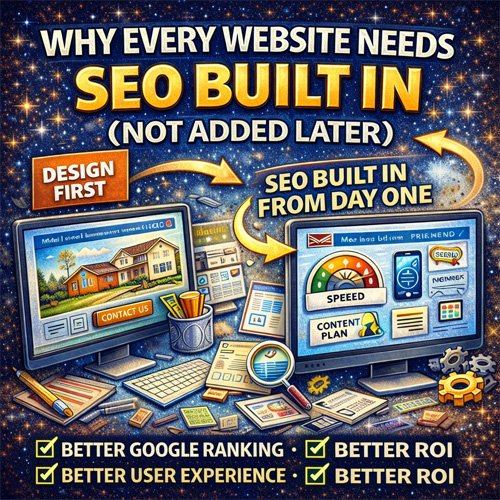
Many business owners make the same costly mistake when creating a website. They focus first on the layout, colors, images, and branding, then think about search engine optimization later. At first, that approach may seem logical. After all, a website needs to look good before it can impress visitors. But if SEO is treated like an afterthought, the website often ends up looking polished while struggling to get found in search results.
The truth is simple: every website needs SEO built in from the start. Search engine optimization should not be something added after the site is finished. It should be part of the foundation. When SEO is built into the design and structure of a website from the beginning, the site performs better, ranks better, loads better, and creates a stronger user experience. That means more traffic, more leads, and more long-term value for the business.
A website is not just an online brochure. It is a digital asset meant to attract visitors, build trust, and help convert attention into business. If people cannot find it, much of its value is lost. That is why SEO and web design should work together from day one.
SEO Is Not Just About Keywords
One reason many businesses delay SEO is that they misunderstand what it really is. They assume SEO simply means adding keywords to the page after the site is complete. While keywords do matter, SEO is much bigger than that. It includes site structure, page speed, mobile usability, internal linking, heading hierarchy, image optimization, metadata, crawlability, content strategy, and user experience.
All of these elements are easier to do properly when they are planned during the design and development process. When SEO is postponed, businesses often have to go back and fix major structural issues that could have been handled correctly from the start. That can mean wasted time, extra cost, and weaker performance.
A Beautiful Website Means Little If No One Finds It
A modern website can have bold visuals, smooth animations, and impressive branding, but none of that guarantees visibility in search engines. If the site is not optimized for discovery, it may remain invisible to the people who need it most.
Business owners often invest heavily in design only to wonder why the website is not bringing in traffic or leads. In many cases, the issue is not the appearance of the site. It is the lack of SEO built into the foundation. Without search visibility, the site depends too heavily on paid ads, direct referrals, or social media traffic to survive.
A strong website should do more than exist. It should actively help people find the business. That only happens when SEO-friendly web design is part of the build.
Site Structure Matters More Than Most Businesses Realize
Search engines need to understand how a website is organized. Clear site structure helps them crawl pages efficiently and understand the relationship between services, blog posts, locations, and supporting content. It also helps users navigate the site more easily.
When SEO is built in early, a website can be planned around logical navigation, clear URL structure, strong internal linking, and page relationships that support both user experience and search visibility. When it is added later, the site may need major reworking just to fix confusing menus, weak page hierarchy, or inconsistent URLs.
A good structure helps both humans and search engines move through the site with less friction. That is one reason SEO should never be treated like a last-minute add-on.
SEO Built In Creates Better Content Planning
Content works best when it is planned with search intent in mind. Before a website is built, businesses should think about what their ideal customers are searching for, what services need dedicated pages, and what supporting content can strengthen authority.
If SEO is included from the beginning, the site can be built with purposeful page topics, well-defined service pages, useful location pages, and content that aligns with search behavior. This gives the website a stronger chance of ranking for relevant searches instead of relying on vague or generic pages that do not match what people actually want.
A site built without that planning often ends up with thin pages, weak service descriptions, and missed ranking opportunities.
Technical SEO Is Easier to Get Right Early
Technical SEO includes many elements that affect how search engines access and evaluate a site. These include clean code, fast load speed, mobile responsiveness, structured headings, optimized images, meta tags, schema opportunities, crawlable navigation, and proper indexing control.
These are not small details. They influence how well a site performs in search and how usable it feels to visitors. When technical SEO is built into the project from the start, the result is usually cleaner and more stable. When it is delayed, businesses may have to patch problems later, which can be more expensive and less effective.
In other words, it is far easier to build a strong foundation than to retrofit one after the house is already standing.
SEO and User Experience Belong Together
Good SEO is not separate from user experience. In many ways, they support each other. Search engines want to show users pages that are fast, clear, mobile-friendly, relevant, and useful. Those are also the same qualities that help human visitors trust a website and stay on it longer.
When SEO is built into a website from the beginning, designers and developers are more likely to create pages that are easy to read, easy to navigate, and structured around real user needs. That leads to stronger engagement and often stronger conversion rates as well.
A website should not force a choice between beauty and performance. The best sites are both visually strong and strategically optimized.
Local Businesses Need SEO From Day One
For local businesses, built-in SEO is especially important. A local service company, medical office, restaurant, contractor, or retail shop often depends on being found by customers in a specific city or region. That means the website should be structured to support local SEO from the beginning.
This may include:
- Location-focused service pages
- Clear NAP information (name, address, phone)
- Locally relevant content
- Title tags and meta descriptions aligned with local searches
- Pages designed to support map visibility and local trust
If local SEO is ignored during the build, the site may miss critical opportunities to appear in the searches that matter most.
Adding SEO Later Often Costs More
Businesses sometimes think they are saving money by launching first and optimizing later. In reality, the opposite is often true. When SEO is not included early, later fixes can involve rewriting page content, restructuring navigation, changing URLs, improving page speed, adjusting headings, redesigning layouts, and repairing technical issues that should never have been there.
That means paying twice: once to build the website, and again to correct what was missing. Building SEO into the project from the beginning is usually more efficient, more strategic, and more cost-effective in the long run.
Built-In SEO Supports Better Conversions Too
SEO is often associated with rankings and traffic, but its benefits go beyond visibility. A website built with SEO in mind is often clearer, more focused, and more aligned with what visitors actually want. That can lead to stronger conversions.
For example, pages built around user intent are more likely to answer the right questions, highlight the right services, and guide visitors toward the next step. Strong headings, clear messaging, faster loading, and easy navigation do not just help search engines. They help real people trust the business and take action.
That means built-in SEO can improve not only who finds your site, but what those visitors do after they arrive.
What Built-In SEO Usually Includes
A website designed with SEO from the start often includes:
- Keyword-aware page planning based on search intent
- Clean site architecture for strong navigation and crawlability
- Optimized title tags and meta descriptions
- Fast, mobile-friendly design
- Proper heading structure for content clarity
- Internal linking strategy
- Image optimization for performance and relevance
- Pages built to support local or service-based visibility
These elements work best when they are intentional, not patched in later.
Why This Matters for Long-Term Business Growth
A website is often one of the most important digital investments a business makes. It should not only represent the brand well today. It should continue working months and years later. When SEO is built in from the beginning, the website is in a stronger position to grow traffic steadily, support content marketing, rank for valuable searches, and generate qualified leads over time.
Businesses that ignore SEO during the build may launch faster, but they often create limitations that hold the site back later. Businesses that build SEO in early create a more durable digital foundation that can support long-term visibility and stronger return on investment.
Final Thoughts
SEO should never be treated like decoration added after the real work is done. It is part of the real work. A website that is designed first and optimized later often ends up costing more and performing less. A website built with SEO from the beginning is more likely to rank well, load well, guide users well, and support business growth in a meaningful way.
At WebDesignerProSEOExpert.com, the smartest approach is clear: build SEO into the website from day one. When design, content, structure, and optimization work together from the start, the result is not just a better website. It is a better business asset.